
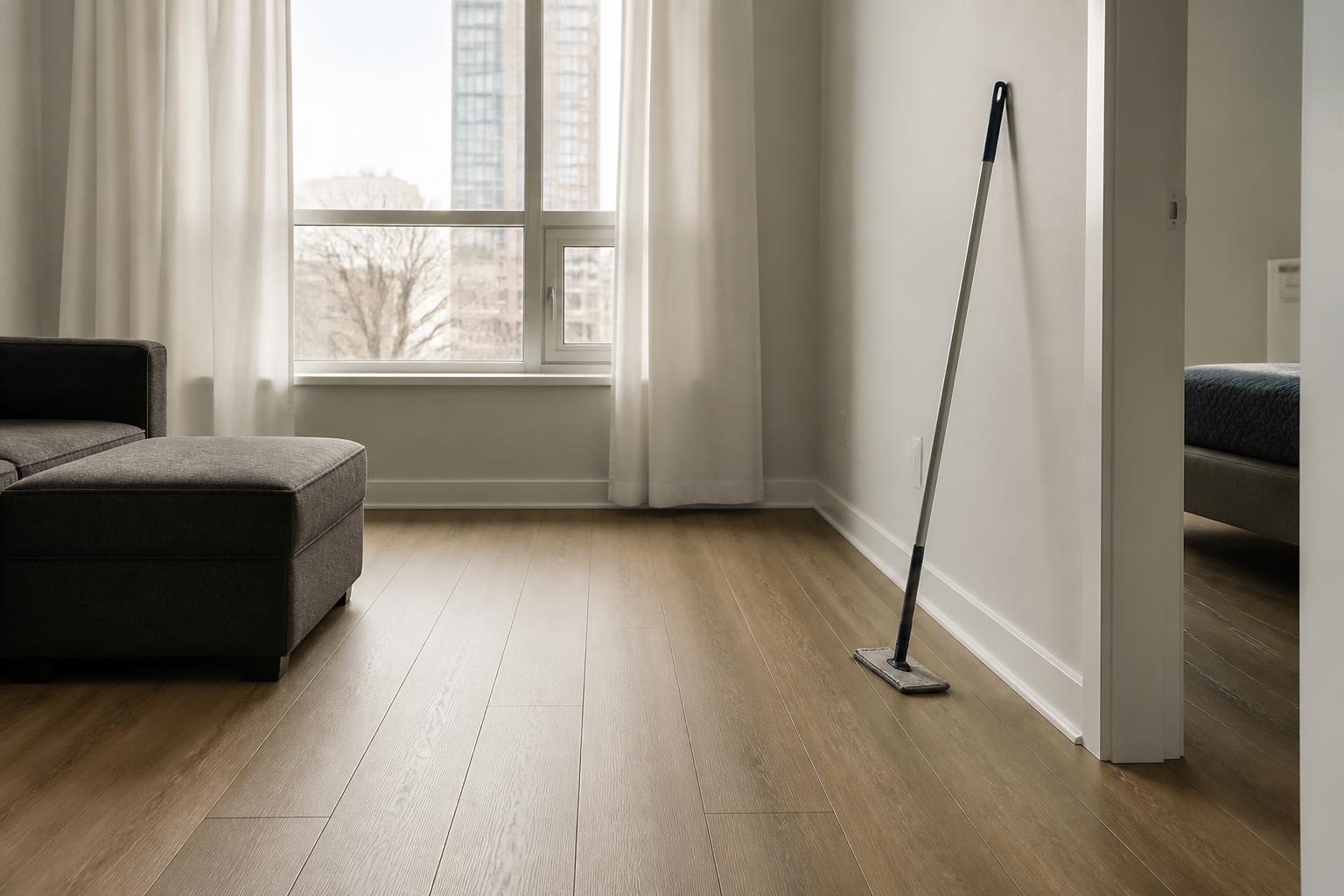
Vinyl plank is popular in Toronto homes because it handles daily life well, but “low maintenance” does not mean “no maintenance.” Dull, streaky, or scuffed vinyl plank usually comes down to the wrong cleaner, too much water, or grit that was left on the surface to grind in. The good news is that learning how to clean vinyl plank flooring properly comes down to a simple routine of regular sweeping and a lightly damp mop each week.
This guide covers the daily and weekly habits, the right way to mop, how to deal with Toronto’s winter salt and slush, and the products and tools to avoid so the wear layer stays clear and the planks stay tight.
Start With the Manufacturer’s Care Guide for Your Plank
Every vinyl plank product is built a little differently. Wear-layer thickness, surface texture, and the core type (flexible or rigid) all affect how the floor responds to cleaners and moisture. Before you settle on a routine, check the manufacturer’s care and maintenance guide for your exact product, and keep it with your other home paperwork so it is on hand whenever you change cleaners, mops, or tools.
The Daily and Weekly Routine That Does Most of the Work
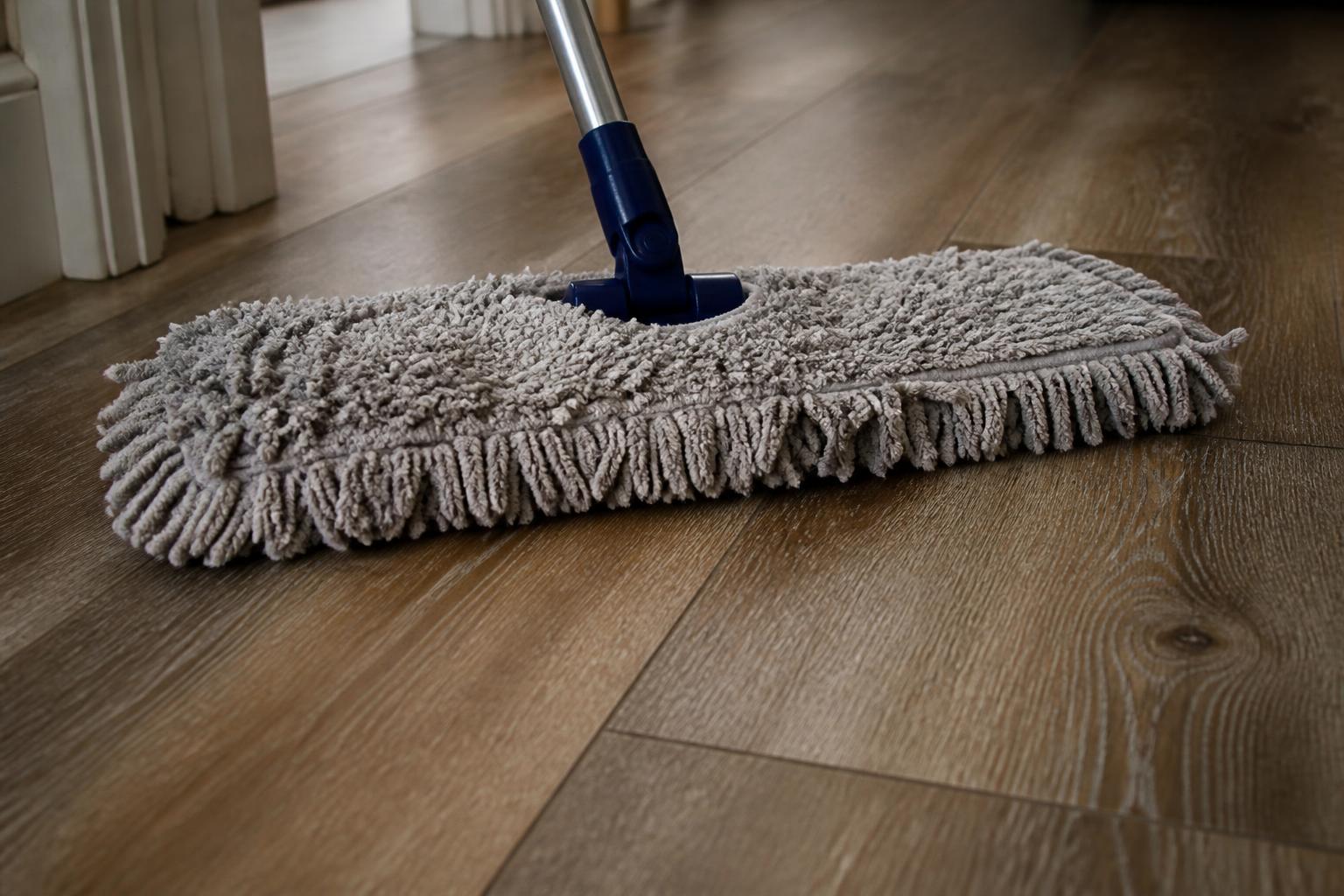
Dry grit is the biggest enemy of any hard surface floor. Sand, salt crystals, and small stones act like sandpaper under foot traffic, so removing them before they get ground in is often more effective than any cleaner. A simple routine works for most households:
- Daily or every other day: sweep with a soft-bristle broom or run a dry microfibre dust mop over the high-traffic paths, especially the kitchen, hallway, and entry.
- Weekly: vacuum with the hard-floor setting and the beater bar turned off, since a spinning brush can scuff the surface, then damp mop the whole floor.
- As needed: wipe spills as soon as you see them rather than letting them dry, because dried residue is harder to remove and can leave a dull patch.
Mopping Vinyl Plank: What to Use and How Much Water Is Enough
For the weekly mop, a flat microfibre mop that you can wring almost dry is the right tool. Vinyl plank is water-resistant at the surface, but standing water can still work its way into the seams between planks, and the less moisture you leave behind the better. A good rule is that the floor should look damp for a moment and then dry on its own within a minute or two.
For cleaning solution, many manufacturers recommend a pH-neutral hard-surface cleaner diluted according to the label, or in some cases plain warm water. Always follow the label directions for the product you buy, and never mix cleaning products together. Health Canada’s guidance on using household chemicals safely says to read the label, ventilate the room, and never combine bleach with other cleaners, including vinegar.
Rinse the mop head often so you are not spreading dirty water back across the planks, and change the mop pad when it stops picking up dirt. Streaks on a vinyl floor are usually a sign of too much cleaner or a mop pad that is overdue for a wash.
Winter Salt, Slush, and Boot Traffic in Toronto Homes
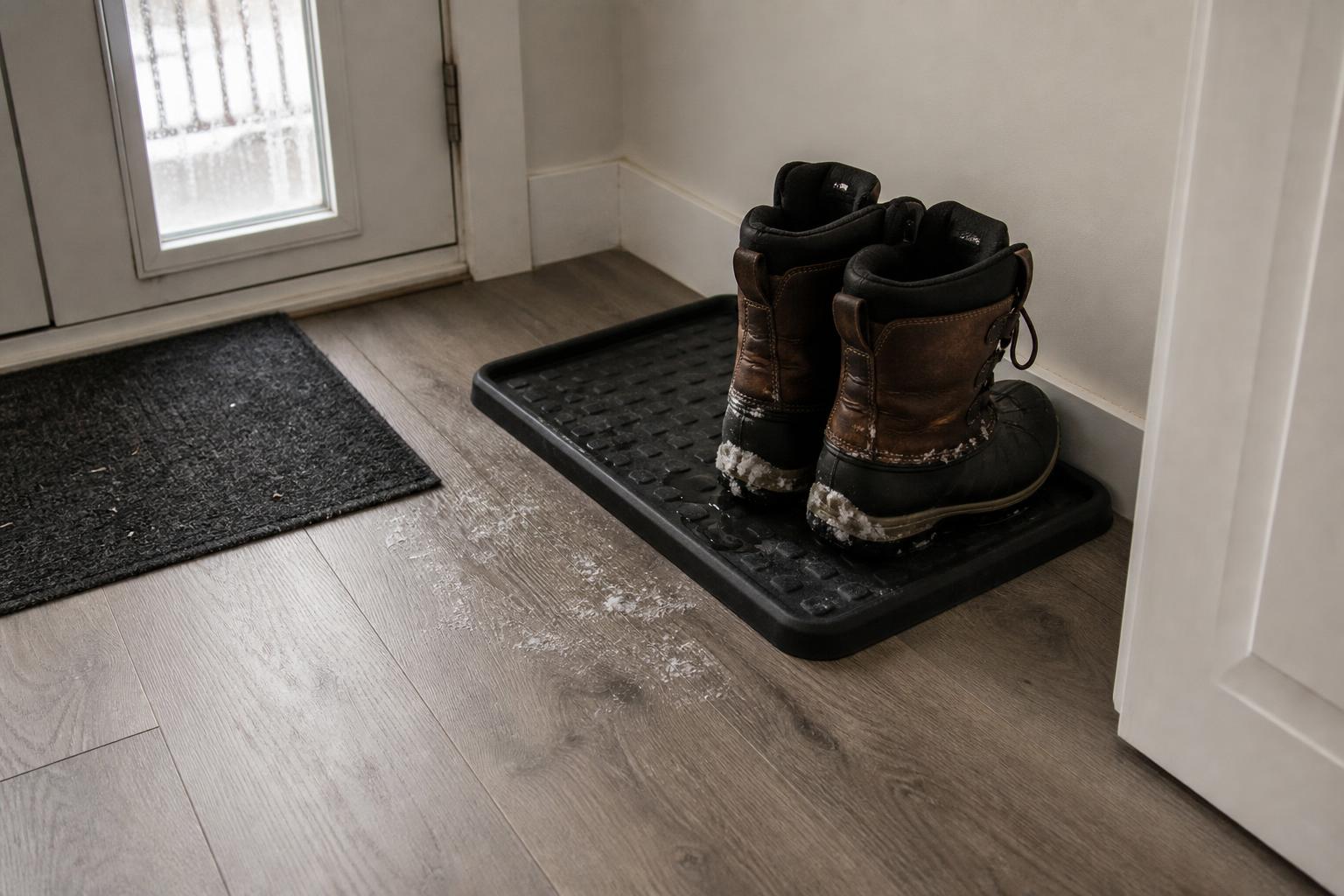
Toronto winters add a cleaning problem that many flooring guides skip. Road salt and meltwater get carried in on boots all winter, and when the water dries it leaves a white film of salt on the floor near the door. Left alone, that salt residue dulls the surface and the gritty crystals scratch it as people walk across.
The best defence is at the door. Put a boot tray or a washable entry mat just inside every exterior door, and ask family and guests to leave wet boots there. When you spot white salt marks, wipe them up with a damp microfibre cloth and clean water first, then follow with your usual cleaner if any film remains. Keep in mind that some rubber-backed mats and trays can stain vinyl over time if they sit in the same spot, so choose products labelled as safe for vinyl flooring and lift them now and then to wipe the floor underneath.
Stains, Scuffs, and Spills
Most everyday spills wipe up with a damp cloth if you get to them quickly. For stubborn marks, start with the gentlest option and work up. Scuff marks from shoe soles often lift with a clean tennis ball or a soft white cloth and a little cleaner, and a dab of the approved cleaner on a cloth handles most food and drink marks.
For things like permanent marker, hair dye, or heavily pigmented stains, check the manufacturer’s guidance before trying anything stronger, and test any product on a spare plank or an inconspicuous corner first. Avoid scrubbing with abrasive pads, which can scratch through the clear wear layer and leave a permanently hazy spot.
What Not to Use on Vinyl Plank
Some of the most popular cleaning tools, and a few everyday habits, are the easiest ways to damage a vinyl floor. Unless your manufacturer says otherwise, avoid the following:
- Steam mops: heat and moisture driven into the seams can cloud the surface or loosen the planks, and many manufacturers advise against steam cleaning vinyl plank.
- Wax, oil soaps, and polish: they can leave a sticky film that attracts dirt and looks hazy, and vinyl plank does not need them.
- Abrasive scrubbers and steel wool: these scratch through the wear layer.
- Soaking the floor: flooding the surface with water can find its way into the seams.
- Bleach and ammonia-based cleaners: they can dull or discolour some vinyl, and many manufacturers warn against them.
- Dragging furniture and appliances: this can tear or dent the surface, and damage like that cannot be cleaned away.
Everyday Habits That Keep the Floor Looking New
A few small habits do as much for the floor as the cleaning itself. Fit felt pads under chair and table legs and replace them when they wear thin or collect grit. Use a floor-safe dolly or lift, rather than slide, heavy furniture and appliances. Keep pet nails trimmed, since long nails can leave fine scratches on hard surfaces. If a room gets strong afternoon sun, closing the blinds during the brightest part of the day can help limit fading over time.
Where the floor gets the most use, such as kitchens and entryways, give those areas a quick sweep more often than the rest of the house. If you are still choosing a floor, our SPC vinyl flooring buyer’s guide explains how rigid-core planks compare for a busy home, and our vinyl plank flooring page shows the options we offer. If you also have hardwood in the house, our guide to cleaning and caring for hardwood floors covers that surface.
When the Problem Is Not Cleaning
Sometimes a floor that looks bad is not dirty at all. If you see gaps opening between planks, edges lifting, or a section that feels hollow or moves underfoot, the cause is usually installation, subfloor, or moisture related, and no amount of cleaning will fix it. Dull patches that do not respond to a proper wash may also point to wear-layer damage. In those cases it is better to have the floor looked at than to keep scrubbing, since aggressive cleaning can make a worn spot worse. If a floor is past saving, our luxury vinyl plank installation team can talk through replacement.
Frequently Asked Questions
Can I use vinegar and water on vinyl plank flooring?
Some households do, but many manufacturers recommend a pH-neutral cleaner instead, and acidic products can dull some finishes, so check your care guide first. Whatever you use, never mix vinegar with bleach, since the combination can release toxic gas.
How often should I mop vinyl plank flooring?
For most homes, a weekly damp mop with daily or every-other-day sweeping is plenty. Busy kitchens and entryways, and any floor near an exterior door in winter, may need a quick damp wipe more often.
Is it safe to use a steam mop on vinyl plank?
Many manufacturers advise against it because heat and moisture can affect the surface and the seams. Check the care guide for your specific product, and if steam cleaning is not listed as approved, a damp microfibre mop is the safer choice.
Why does my vinyl plank floor look cloudy or streaky after cleaning?
The usual causes are too much cleaner, a dirty mop pad, or leftover residue from a wax or polish. Try mopping with clean warm water and a freshly washed microfibre pad, then let the floor dry before judging the result.
If you are not sure which cleaner is right for your plank, or you are planning a new floor and want one that suits how your household really lives, Tony’s Flooring can walk you through the options. Call us at (416) 255-9631, visit our Etobicoke showroom, or contact our team and we can help you find the right care approach for your floor or choose a new one.