
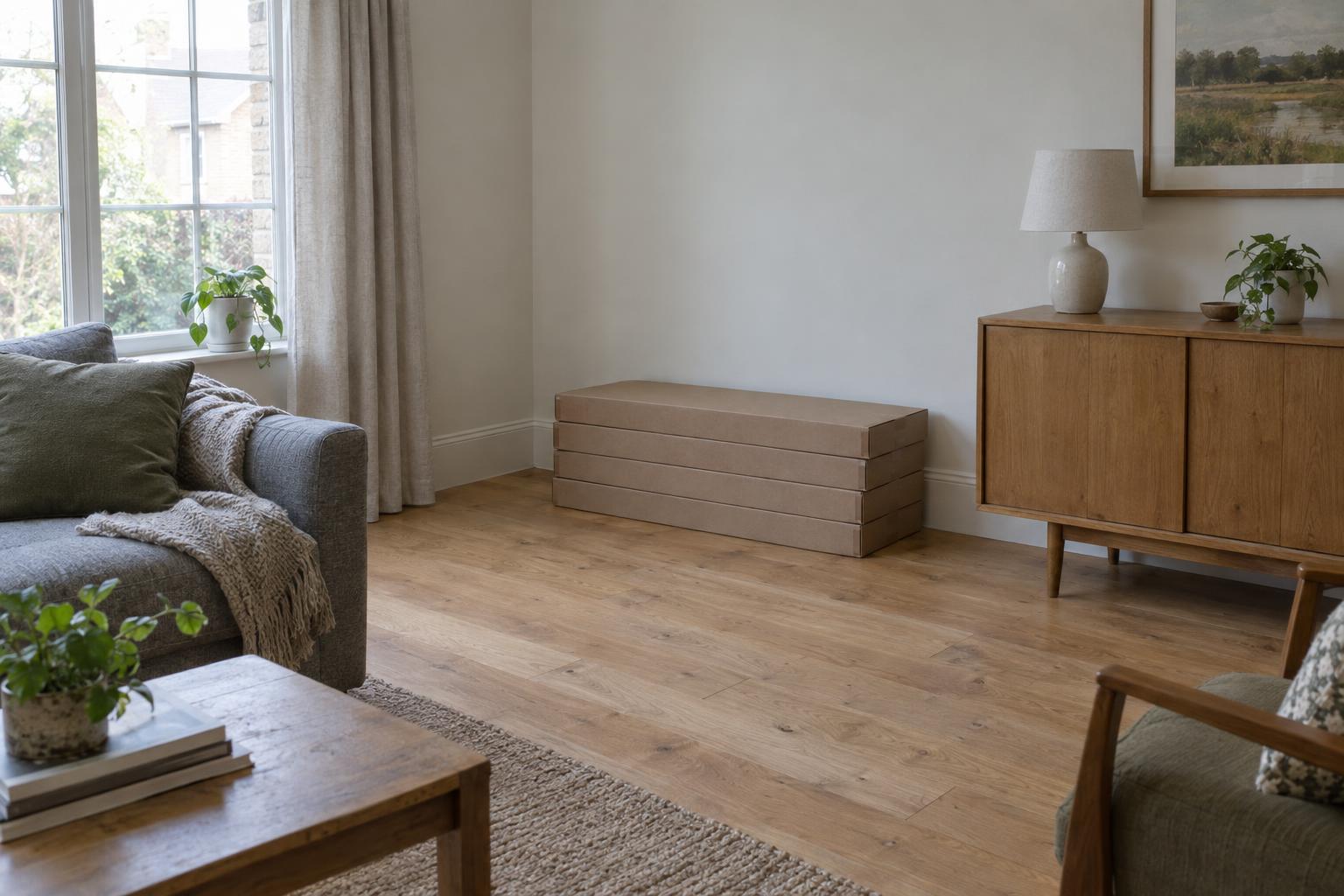
Flooring waste allowance is the extra material included above the measured floor area for a particular layout. It accounts for cuts and other product-specific requirements. It is not a spare number to remove from an order without asking how the installer calculated it.
If you are comparing flooring quotes in Toronto or Etobicoke, ask to see the measured area, the planned allowance and the number of full cartons separately. That breakdown helps explain why the material quantity can exceed the room’s square footage. It also separates installation planning from any additional unopened material you choose to keep for future repairs.
What flooring waste allowance covers
A flooring layout rarely uses every piece exactly as it comes from the carton. Boards or tiles meet walls, doorways, corners and fixed features. Some cut pieces can be used elsewhere; others are too short, the wrong shape or unsuitable for the next part of the layout. The planned order needs to reflect that practical cutting process.
Direction and pattern matter. A straight layout, a diagonal arrangement and a more complex pattern can produce different cutting requirements. Product dimensions also affect which offcuts remain useful. This is why a general percentage from an online discussion should not replace a layout-based calculation for your own room.
The installer must also follow the selected product’s instructions. Requirements can differ between solid wood, engineered wood, laminate, vinyl and tile. Do not transfer an allowance from a different floor simply because the room is the same size. Confirm the quantity again if the material, board size or pattern changes.
For an example of product-specific preparation, Quick-Step’s installation guidance separates advice by flooring type. Check the selected product’s installation guide before agreeing on the final quantity and storage arrangements. Ask the supplier for those instructions before approving the final order.
Allowance and repair stock serve different purposes
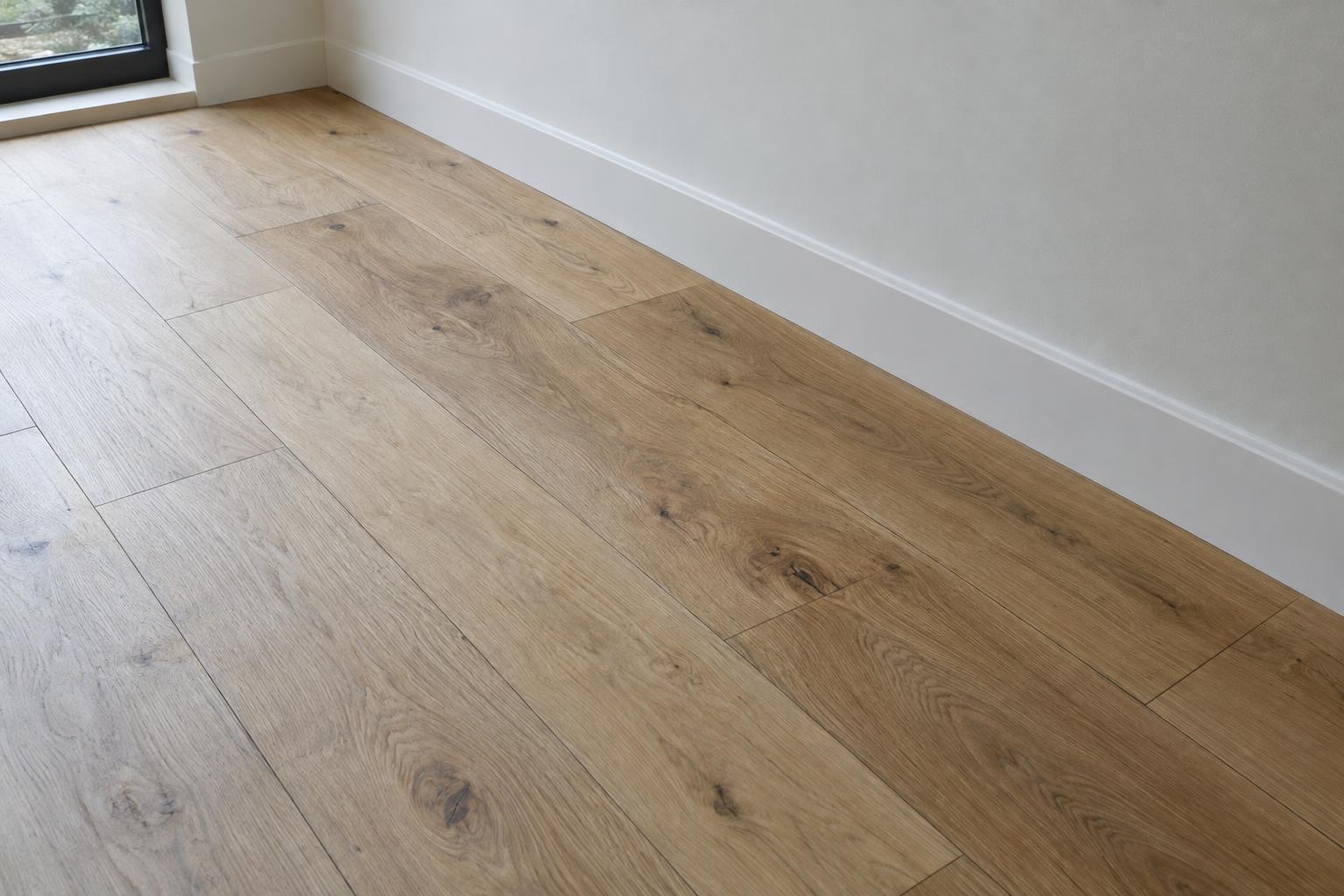
Material expected to be used or cut during installation is different from material intentionally kept afterwards. If you want spare boards for a future repair, say so before ordering. Ask whether that quantity is included in the quote or whether it is a separate addition. Without that distinction, two apparently similar orders may cover different needs.
Room shape and carton size change the order
Begin with an accurate measure of every area receiving the new floor. Include alcoves and connected spaces, and clarify what happens around fixed cabinetry or other features. An approximate real-estate room size or an old floor plan is useful background, but it should not be treated as a final material take-off.
Small spaces can involve a surprising number of cuts. A hallway with several doors may need more planning than a larger open rectangle. A room with angled walls or a bay can produce offcuts that do not fit elsewhere. The relevant question is how the floor will be laid, not simply whether the room feels large.
Most packaged flooring is ordered in full cartons. After the layout-based calculation, the quantity may need to round up to the available carton coverage. Ask for the coverage per carton and the final carton count. That makes the connection between square footage and the delivered order easier to check.
Check the units as well. A quote, a floor plan and a product label may not all use the same units. Confirm that the calculation compares like with like before interpreting a difference as excess material. Keep the final product name, dimensions and carton coverage with your order paperwork.
Product changes deserve a fresh calculation
A wider plank or a different tile size can change how a layout works at walls and doorways. A new colour within the same range may leave the dimensions unchanged, but a switch to another collection may not. Have the actual chosen product confirmed on the final order instead of carrying over an early estimate without review.
Compare quotes without deleting useful material
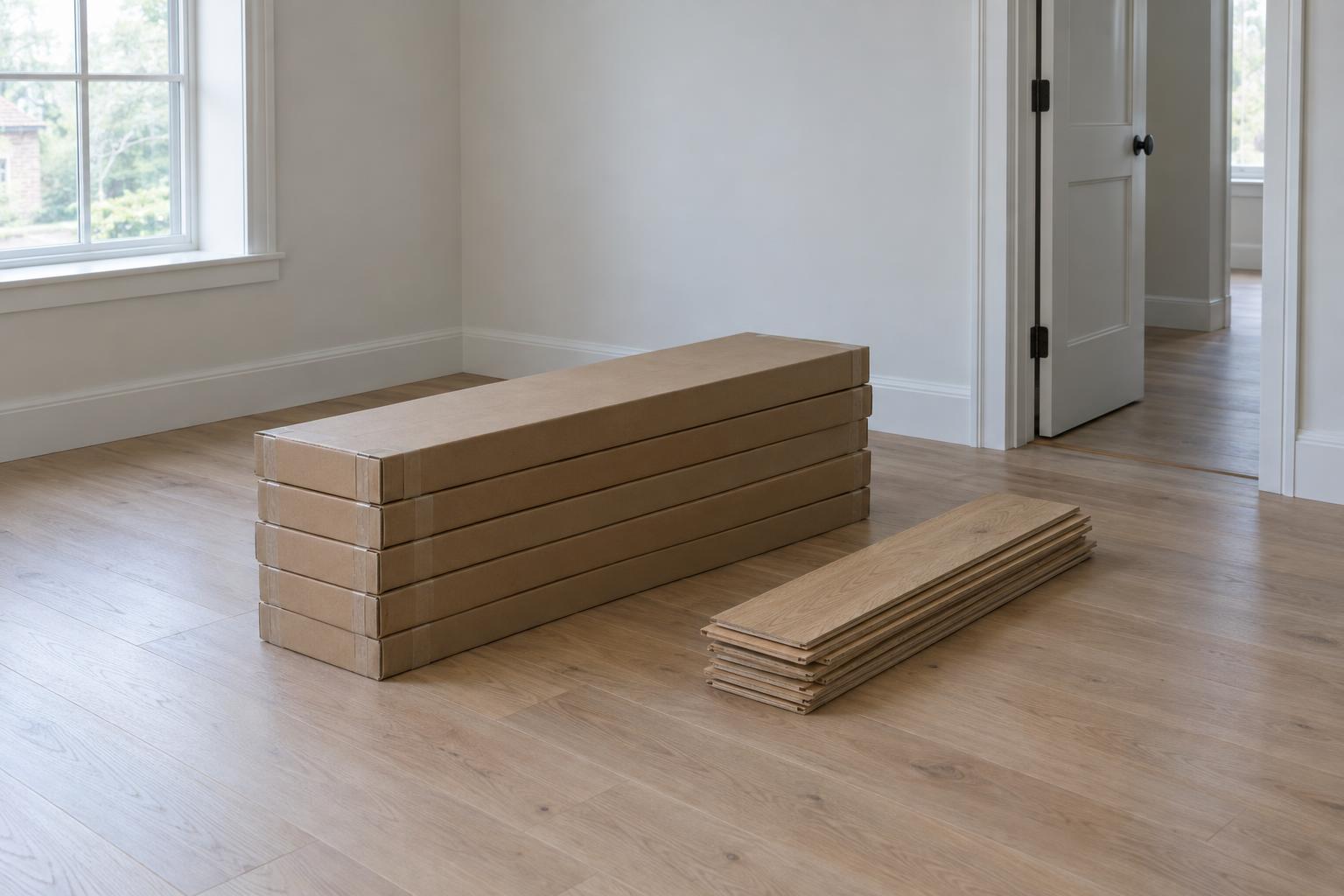
When one quote includes more flooring than another, compare their scope before deciding which is better. Are both measuring the same rooms? Do they include closets? Are they based on the same product and direction? Does either include repair stock? These questions are more useful than comparing material totals alone.
Ask the person preparing each quote to explain the planned allowance. A clear answer should connect the quantity to your room, product and layout. If the explanation is unclear, request a breakdown. You should be able to see what was measured and how the order moved from that area to a full-carton quantity.
Avoid reducing the order simply to match an online calculator. Running short can interrupt the work, and later stock may not match the original material exactly. Availability and batch consistency should be discussed with the supplier rather than assumed. Buying extra without a plan can also leave you paying for cartons you did not need.
A final order needs the selected material and a proper measure. Our residential flooring installation service is the next place to discuss how the layout affects the quantity for your home.
Put the decision in writing
Keep the accepted quantity and the reason for any extra cartons with your quote. If you approve a layout change, ask whether the material order changes too. A short written note avoids confusion when delivery, installation and final cleanup happen on different days.
Plan for leftovers before the cartons arrive
Ask about the return policy before ordering. Opened cartons, special orders and discontinued products may have different conditions, and a return should never be assumed. Confirm the current terms for the actual product, including any timing or condition requirements, rather than relying on another customer’s experience.
If you keep spare material, retain the identifying information from the packaging. Store it according to the manufacturer’s directions in a suitable space. Do not assume an unheated shed, damp basement corner or outdoor storage area is acceptable for every flooring material. Product-specific instructions should guide the decision.
Discuss delivery access and where the cartons will be placed. A safe, suitable storage position helps keep the material protected before work begins. Tell the supplier about stairs, narrow access or other restrictions in advance, and use the flooring delivery service information to start that conversation.
After installation, review the remaining material with the installer. Separate useful full pieces and any unopened cartons from offcuts that cannot serve a future repair. You can then decide what to retain or return under the agreed terms without confusing unused material with a mistake in the original calculation.
Flooring quantity questions
Is there one waste percentage for every floor?
No single allowance suits every product and layout. Ask for a calculation based on the exact material, the measured rooms and the intended direction or pattern.
Does the allowance guarantee spare boards afterwards?
No. The planned extra may be consumed by cuts and layout needs. If future repair stock matters to you, request a separate amount and have it identified on the order.
Can I return every unused carton?
That depends on the product and the supplier’s current terms. Confirm the policy before ordering and keep any returnable cartons in the required condition.
For help reviewing a flooring waste allowance, contact Tony’s Flooring Centre at (416) 255-9631. Visit our Etobicoke flooring store with your room plan and quote questions before placing the final order.