
Hardwood floors are one of the biggest investments a homeowner makes in a house, and the difference between a floor that still looks great after fifteen years and one that needs an early refinish almost always comes down to routine care. Most of the damage we see when we’re called in to look at a tired floor did not happen from normal walking. It happened from grit, moisture, and the wrong cleaning products, all of which are easy to avoid once you know what to look for.
This guide covers the daily and weekly habits that protect a hardwood finish, the cleaning products that are safe to use, the mistakes that quietly wear a floor down years before it should need attention, a seasonal checklist worth keeping on the fridge, and the signs that tell you it’s time for a professional refinish rather than another round of cleaning.
Why Grit Is the Real Enemy of a Hardwood Floor
Foot traffic alone rarely damages a well-finished hardwood floor. The damage comes from what gets tracked in on the bottom of shoes and paws: sand, small stones, and dry dirt that act like sandpaper every time they get ground into the finish underfoot. Over months and years, that constant fine scratching is what turns a glossy floor dull and lets moisture start working into the wood at the seams.
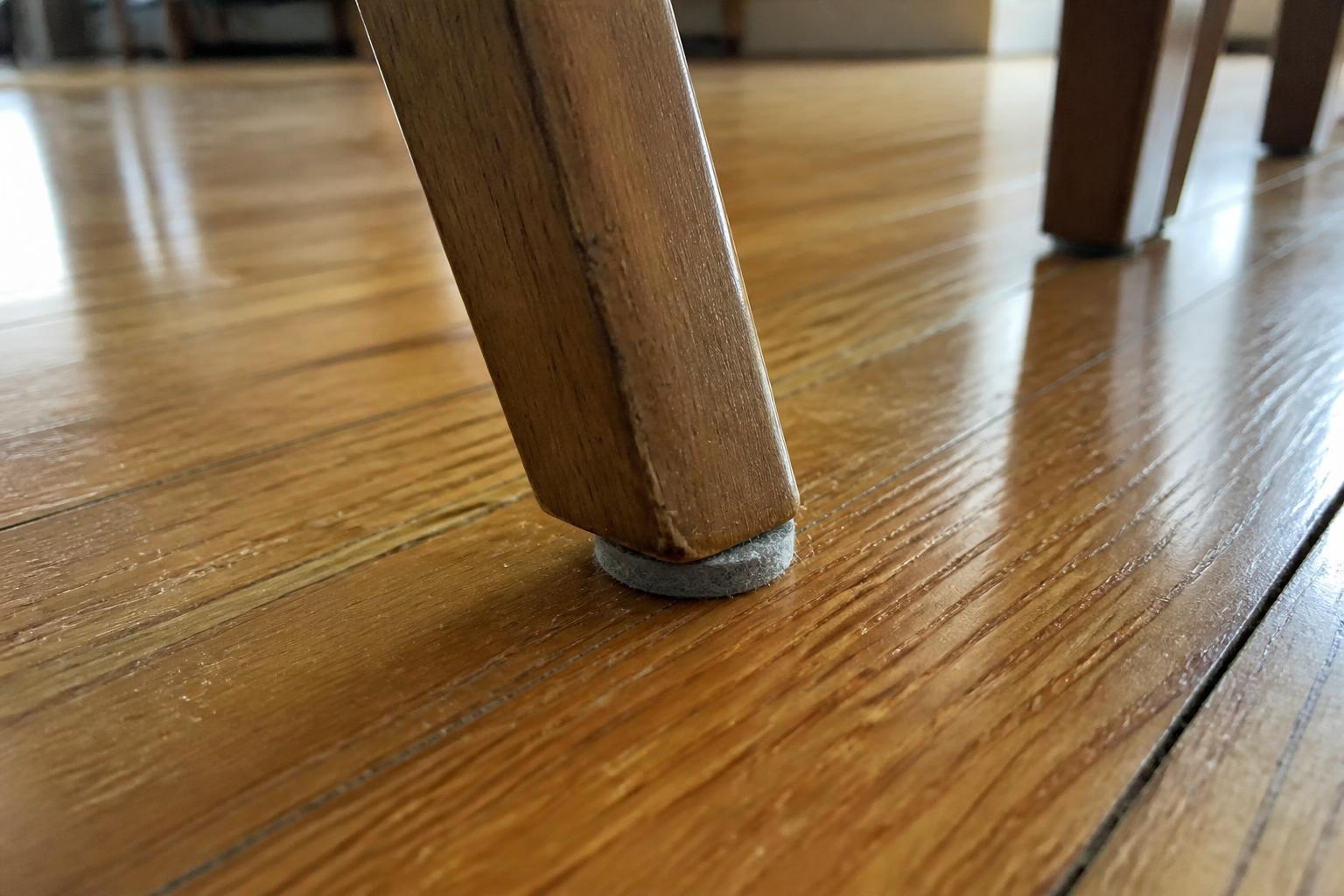
A good walk-off mat at every exterior door, paired with a “shoes off” habit in high-grit seasons, does more to protect a floor’s finish than any cleaning product ever will. Felt pads under furniture legs and rugs in high-traffic pivot points, such as in front of a kitchen sink or at the bottom of a staircase, handle the spots a mat can’t reach.
The Cleaning Routine That Actually Protects the Finish
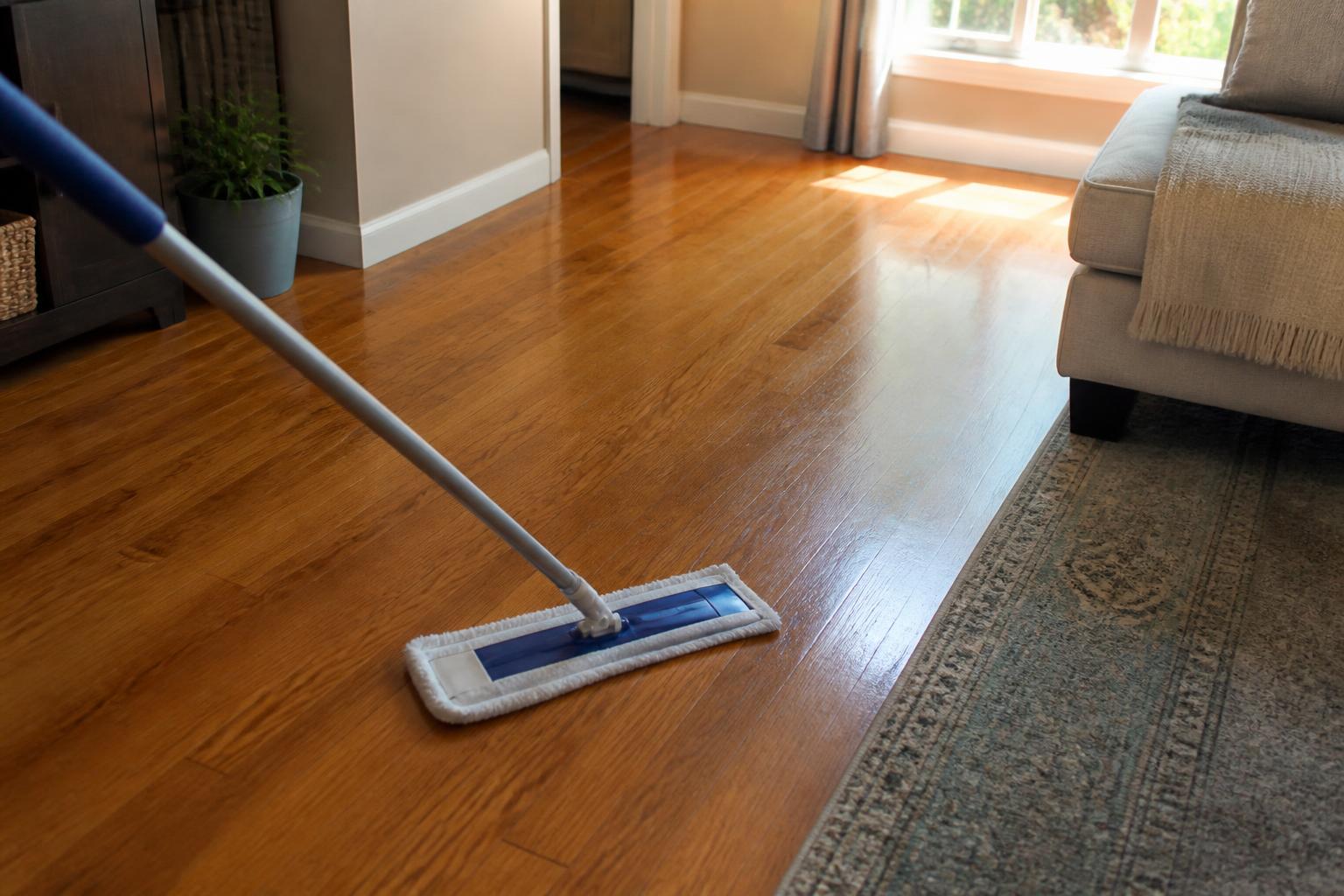
Daily maintenance should be dry: a microfibre dust mop or a vacuum with a hard-floor setting and the beater bar switched off. A beater bar designed for carpet fibre will scuff a hardwood finish over time, so it’s worth checking that setting before running the vacuum over wood.
For deeper cleaning, the safest approach is a well-wrung, barely damp microfibre mop with a cleaner made specifically for finished hardwood. Standing water is the fastest way to damage a wood floor, so a mop that leaves visible puddles is doing more harm than good no matter how dirty the floor looked beforehand. Wipe up any spill the moment it happens rather than letting it sit, especially in kitchens and entryways where spills are most common.
Products to Avoid
Oil soaps, wax-based polishes, and all-purpose household cleaners are common culprits behind a dull, streaky, or hazy-looking floor. Oil soaps leave a residue that builds up in layers and eventually needs a professional strip before a refinish can be applied. Vinegar and ammonia-based cleaners can break down certain polyurethane finishes over repeated use. If a bottle doesn’t specifically say it’s formulated for finished hardwood, it’s safer to leave it in the cupboard.
Protecting Hardwood From Sunlight and Humidity
Direct sunlight fades and unevenly ages hardwood over time, which is why area rugs, furniture, and window coverings are worth rotating occasionally rather than leaving a rug or sofa in the exact same spot for years. Humidity swings are just as important: hardwood expands and contracts with the seasons, so keeping indoor humidity in a moderate, stable range with a humidifier in dry winter months and normal ventilation in humid months helps prevent the gapping, cupping, or crowning that comes from repeated swelling and shrinking. The National Wood Flooring Association publishes similar humidity guidance for homeowners.
A simple hygrometer placed in a main living area is an inexpensive way to keep an eye on this. Most hardwood manufacturers recommend keeping indoor relative humidity somewhere in the 35 to 55 percent range year-round. When humidity drops well below that in the winter heating season, boards can shrink enough to open small gaps between planks. When it climbs too high in a humid summer, boards can swell, cup, or press against each other at the seams. Neither extreme is something a cleaning routine can fix once it happens, which is why prevention through stable indoor humidity matters more than most homeowners expect.
A Seasonal Hardwood Care Checklist
Breaking care down by season makes it easier to stay ahead of problems instead of reacting to them. In the fall, before heating systems kick in for the year, it’s worth checking felt pads for wear, confirming walk-off mats are in good shape for the wet leaves and slush season ahead, and giving the floor a deeper clean with a hardwood-safe product before winter traffic increases. In the winter, running a humidifier and watching for any new gaps between boards helps catch dryness-related movement early, while a stricter shoes-off policy limits the salt and grit that road conditions track indoors.
Spring is the right time for a thorough inspection once heavy coats and boots are put away: look over the whole floor in good daylight for scuffs, dullness, or wear patterns that built up over winter, and consider a professional screen-and-recoat if the finish looks tired but the wood underneath is still sound. Summer is generally the lowest-maintenance season, but it’s still worth watching humidity levels, especially in homes without central air, and keeping an eye on any spot where a window lets in strong afternoon sun for extended periods.
Signs a Floor Needs More Than Cleaning
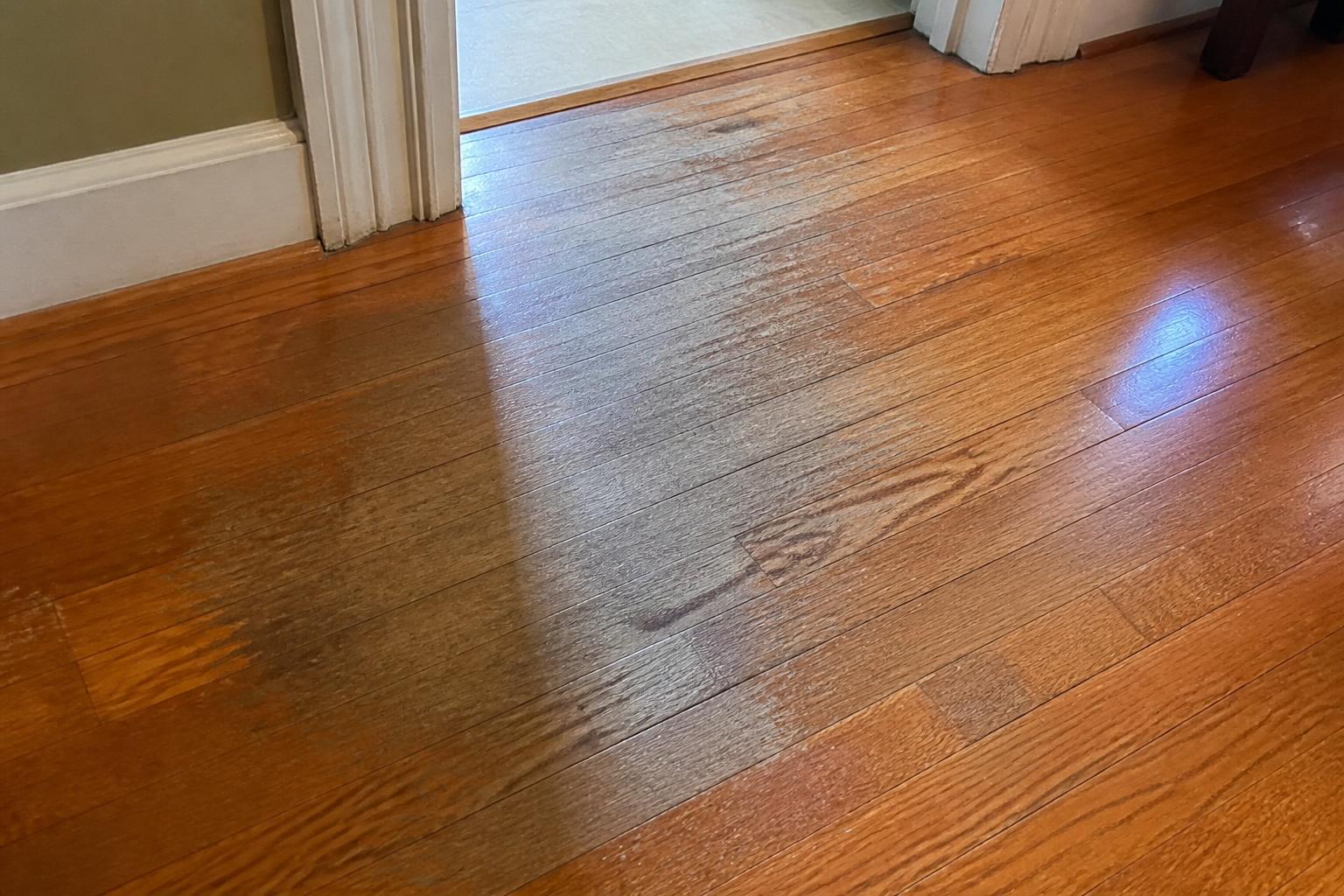
Cleaning routines can only do so much. A floor is telling you it needs professional attention when you notice deep scratches that catch a fingernail, grey or white patches where the finish has worn through to bare wood, persistent dullness that doesn’t respond to cleaning, or boards that feel rough compared to the rest of the floor. Catching these signs early usually means a lighter screen-and-recoat job is enough, which is faster and less expensive than waiting until a full sand-down and refinish is the only option.
Frequently Asked Questions
How often should hardwood floors be professionally refinished?
Most hardwood floors need a full refinish every seven to ten years under normal use, though floors in busy households with pets or young children sometimes benefit from a lighter screen-and-recoat every three to five years to keep the finish protected between full refinishes.
Is steam cleaning safe for hardwood floors?
No. Steam cleaners push moisture and heat directly into the wood and finish, which can cause warping, gapping, and finish failure. A barely damp microfibre mop with a hardwood-safe cleaner is the safer alternative.
What’s the fastest way to protect a new hardwood installation?
Add walk-off mats at every entry point, felt pads under all furniture legs, and a consistent dry-dust-mop routine from day one. These three habits prevent the majority of the wear that leads to an early refinish.
Do engineered and solid hardwood need different care?
Day-to-day cleaning is the same for both: dry dust-mopping, a barely damp hardwood-safe cleaner, and felt pads under furniture. The main difference shows up at refinishing time. Solid hardwood has a thicker wear layer and can typically be sanded and refinished several times over its life, while engineered hardwood has a thinner top veneer and can usually only handle one or two light refinishes before the veneer is too thin to sand again safely. Knowing which type is underfoot helps set expectations for how the floor should be maintained long term. If it’s been a while since your hardwood flooring was last serviced, a quick professional assessment can confirm which category applies.
If your hardwood is showing more wear than a cleaning routine can fix, Tony’s Flooring can take a look and tell you honestly whether a refinish, a screen-and-recoat, or a full replacement makes the most sense for your floor and your budget. Check our flooring cost calculator for a ballpark estimate, call us at (416) 255-9631, or reach out to our team to schedule a walkthrough.