
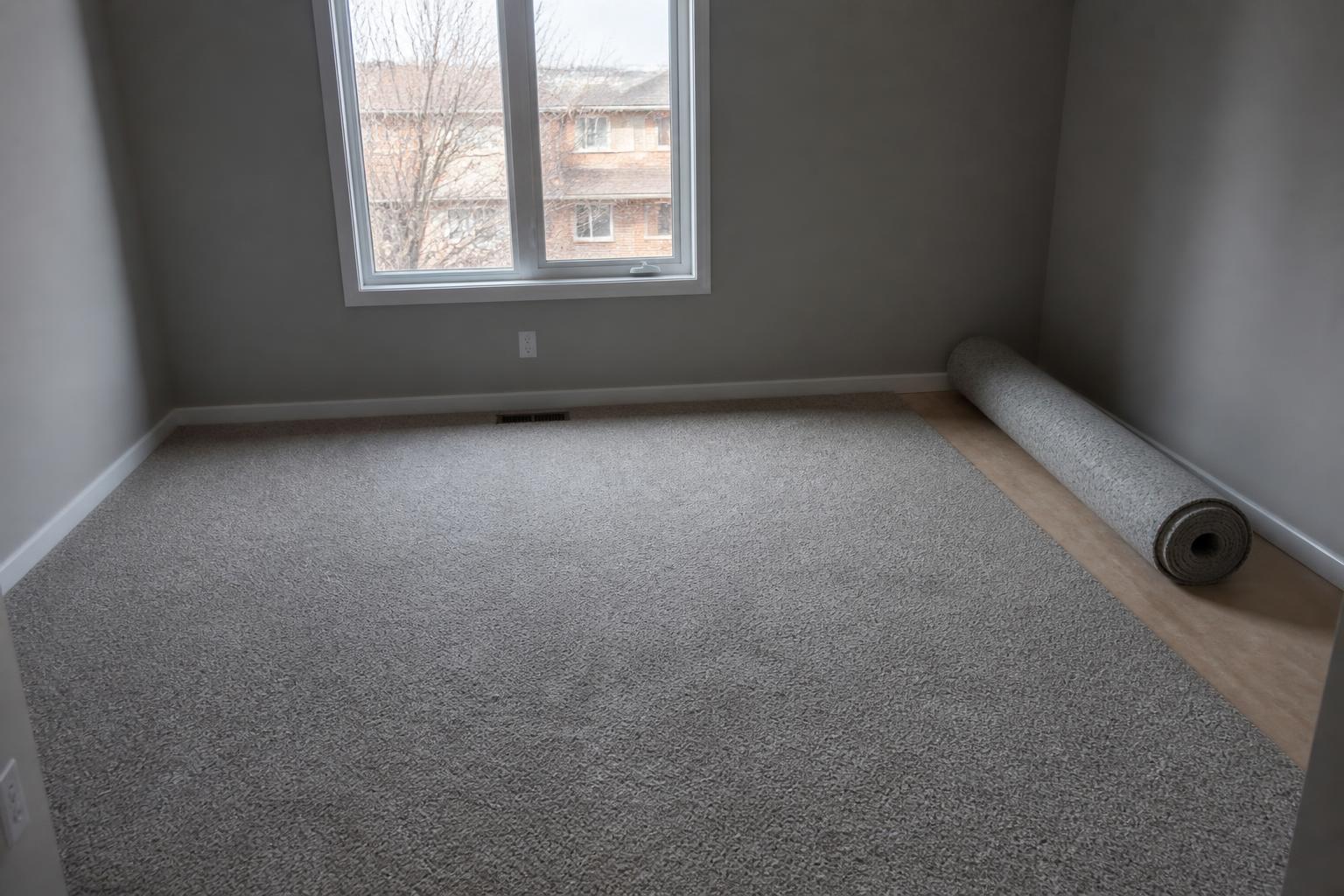
When homeowners ask what carpet installation cost will look like in Toronto, the honest answer is that the carpet itself is only one line on the quote. The finished price depends on the fibre and pile you pick, the pad underneath, what is under the pad, what has to come out first, and how many corners, doorways, and stairs the crew has to work around.
Below, we walk through each of those pieces in the order they usually appear on an estimate, so you can see where a number comes from and what to ask when two quotes do not match.
How Fibre and Pile Shape the Price
Nylon is among the most durable synthetic carpet fibres and tends to sit toward the upper end of the price range for that reason. Polyester comes in a wide spread of colours at a friendlier price, though it can mat or crush sooner in hallways and other heavy-traffic areas. Wool, where it is available, usually costs the most of the common choices.
Pile style matters as well. A dense cut-pile or textured construction generally uses more yarn, so it often costs more per square foot than a simple loop style. Patterned and high-low constructions add manufacturing steps that carry through to the material price.
Some carpets also come with a factory-applied stain or soil treatment, and the warranty terms attached to it vary by product. If a treatment is part of the appeal, ask what it covers and what care it needs, since that detail is rarely visible on the price tag.
Padding: The Line Item Most People Skip
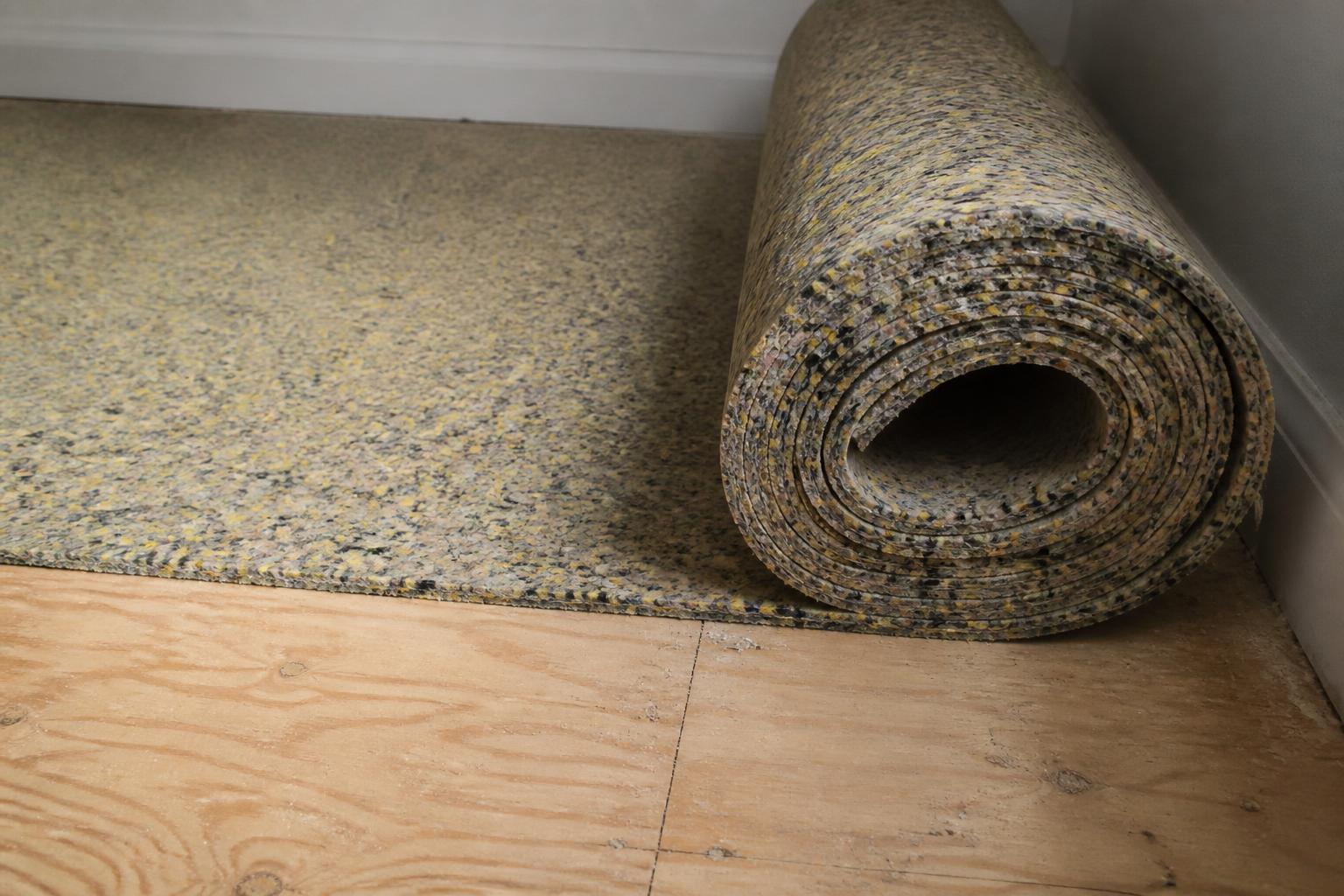
Pad rarely gets the attention the carpet does, but it changes how the floor feels underfoot and how well the carpet holds its shape over time. A firmer, denser pad usually supports the fibres better than a soft, thin one.
More is not always better, though. Carpet manufacturers commonly set the pad type, thickness, and density they allow with their products, and going outside those limits can cause premature wear. When you review an estimate, ask which pad is included and whether it meets the carpet maker’s requirements.
What Sits Under the Carpet
The subfloor decides how smooth the finished carpet feels. A clean, flat subfloor may need little more than a once-over, while squeaks, uneven spots, or leftover adhesive take extra time to correct before the pad and carpet go down. That time shows up as labour on the quote, which is a large part of why two estimates for the same room can differ.
Taking Out the Old Floor
Removal and disposal are usually priced separately from the new installation. Pulling up an old carpet and pad is typically quick, while firmly fixed tile, vinyl, or hardwood takes noticeably longer and creates more waste to haul away. Check whether the estimate includes tear-out and disposal, because leaving it off is one of the most common reasons a low price grows later.
Layout, Seams, and Stairs
Most residential carpet installation is stretched tight over tack strips along the walls, with seams placed where they will be least noticeable. An open, square room needs fewer cuts than one with closets, several doorways, or an irregular shape, and each extra seam or cut adds labour.
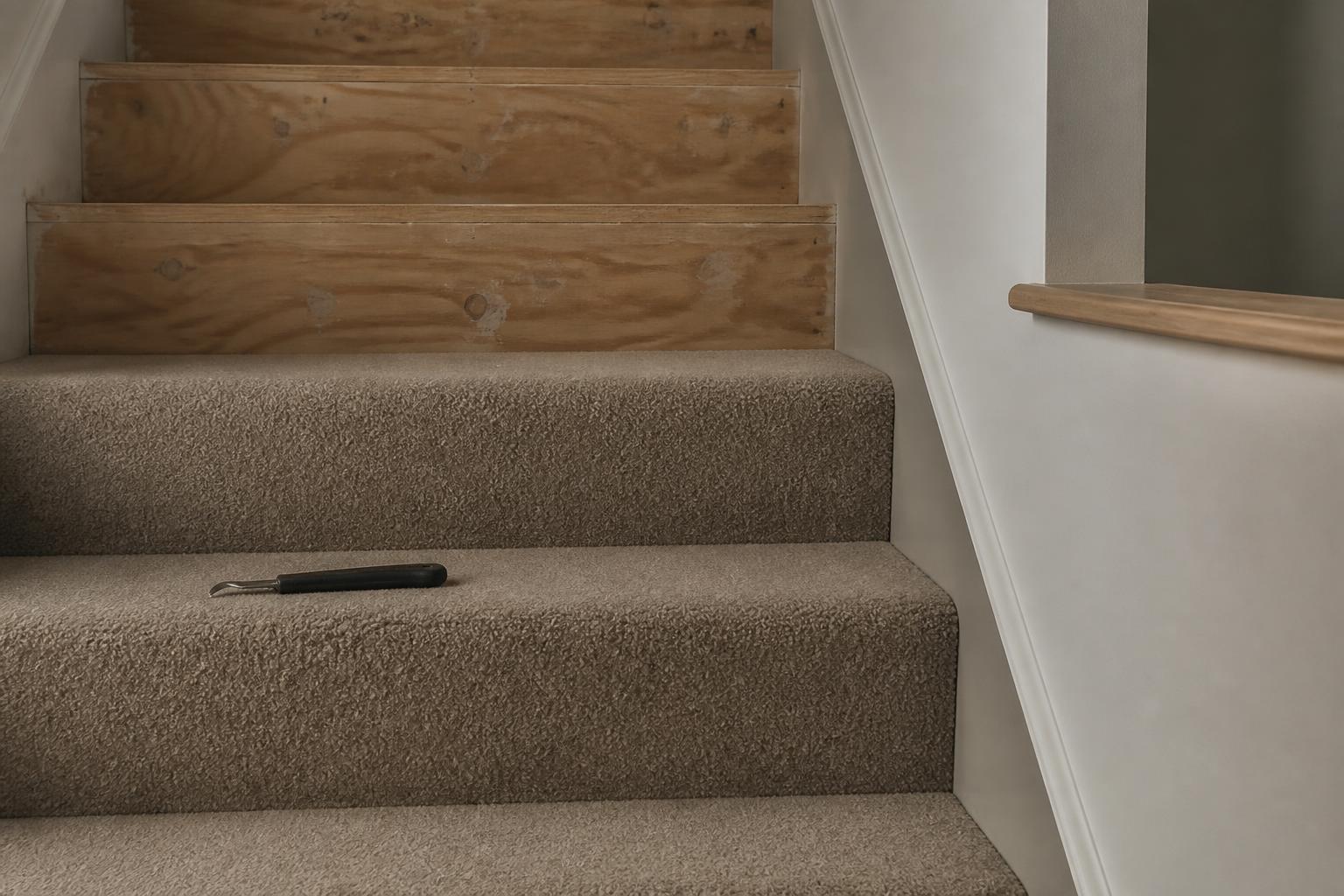
Stairs are their own category. Every tread and riser is measured, cut, and wrapped, so a staircase takes longer per square foot than a flat room and is often quoted as a separate line. If your project includes stairs, ask for that figure on its own so you can see what it contributes.
Comparing Estimates Side by Side
A quote that lists the fibre, pile style, pad specification, subfloor work, and removal as separate items is far easier to compare than a single lump sum. Put your estimates next to each other and look for gaps: a missing pad spec or an unmentioned tear-out usually explains why one number is lower than another.
For a starting range, a calculator is useful. For a firm figure, nothing replaces having someone measure your rooms and look at the existing floor in person. If you are weighing carpet against other floors, our guides to hardwood flooring installation cost and laminate flooring installation cost walk through the same questions for those materials.
What to Have Ready Before You Ask for a Quote
You will get a more accurate number, and fewer surprises later, if you gather a few details first:
- Which rooms are getting carpet, and whether any of them include stairs or a landing.
- What is on the floor now, and whether it is staying or coming out.
- Any known problems underneath, such as squeaks, soft spots, or past water damage.
- The fibre and pile style you are leaning toward, or a few you would like to compare.
- Whether furniture will need to be moved, and who will do it.
- Your timeline, including any date you need the room back in use.
With that list in hand, an estimator can price the work line by line instead of guessing, and you can compare one quote against another on equal terms.
Toronto Conditions Worth Planning For
Toronto’s heating season dries the air indoors and summer humidity can push it back up, and basements are where moisture tends to matter most. Health Canada’s guide to addressing moisture and mould indoors recommends keeping indoor humidity between 30% and 50% and suggests considering removing carpets from a basement floor, so a damp basement is worth sorting out before any carpet goes down.
Older Toronto houses also tend to have subfloors that have been patched or modified over the years. That makes an on-site look more valuable than a phone estimate when you are budgeting for levelling or repairs.
How Long the Work Takes
Timing is another thing that is easy to miss when you are focused on price. A single bedroom with a sound subfloor can often be finished in a few hours to a day. Whole-floor projects, homes with staircases, and rooms that need subfloor repairs can stretch to a couple of days.
Who Stands Behind What
Carpet normally comes with a manufacturer’s warranty on the product, and an installer may separately stand behind the workmanship. Those are different promises from different parties, so ask for each in writing and read what it covers, including any pad or installation conditions the manufacturer attaches.
Frequently Asked Questions
Does nylon carpet cost more than polyester?
Nylon generally costs more because of its durability and resilience, while installation labour is about the same for either fibre since the method does not change.
Does the pad really matter for the total price?
It can. A better pad adds to the upfront cost, but it supports the carpet and affects comfort, so compare the pad specification alongside the carpet itself instead of looking only at the carpet price.
How much does removing the old flooring add?
It depends on what is coming out. Old carpet and pad usually come up quickly, while firmly fixed tile, vinyl, or hardwood takes more labour, so confirm whether tear-out and disposal are included before you accept a quote.
Should the pad be replaced when the carpet is replaced?
Carpet makers often recommend a new pad with new carpet, because an old pad can be worn or compressed, so ask what applies to the product you are choosing and include the pad in the estimate.
Is carpeting stairs more expensive than carpeting a room?
Per square foot, usually yes. Stairs need more precise cutting and fitting, and they are often priced as a separate line from the main installation.
To get a number for your own rooms, try our flooring cost calculator for a starting estimate, contact our team to arrange an estimate for your space, or call Tony’s Flooring Centre at (416) 255-9631.