
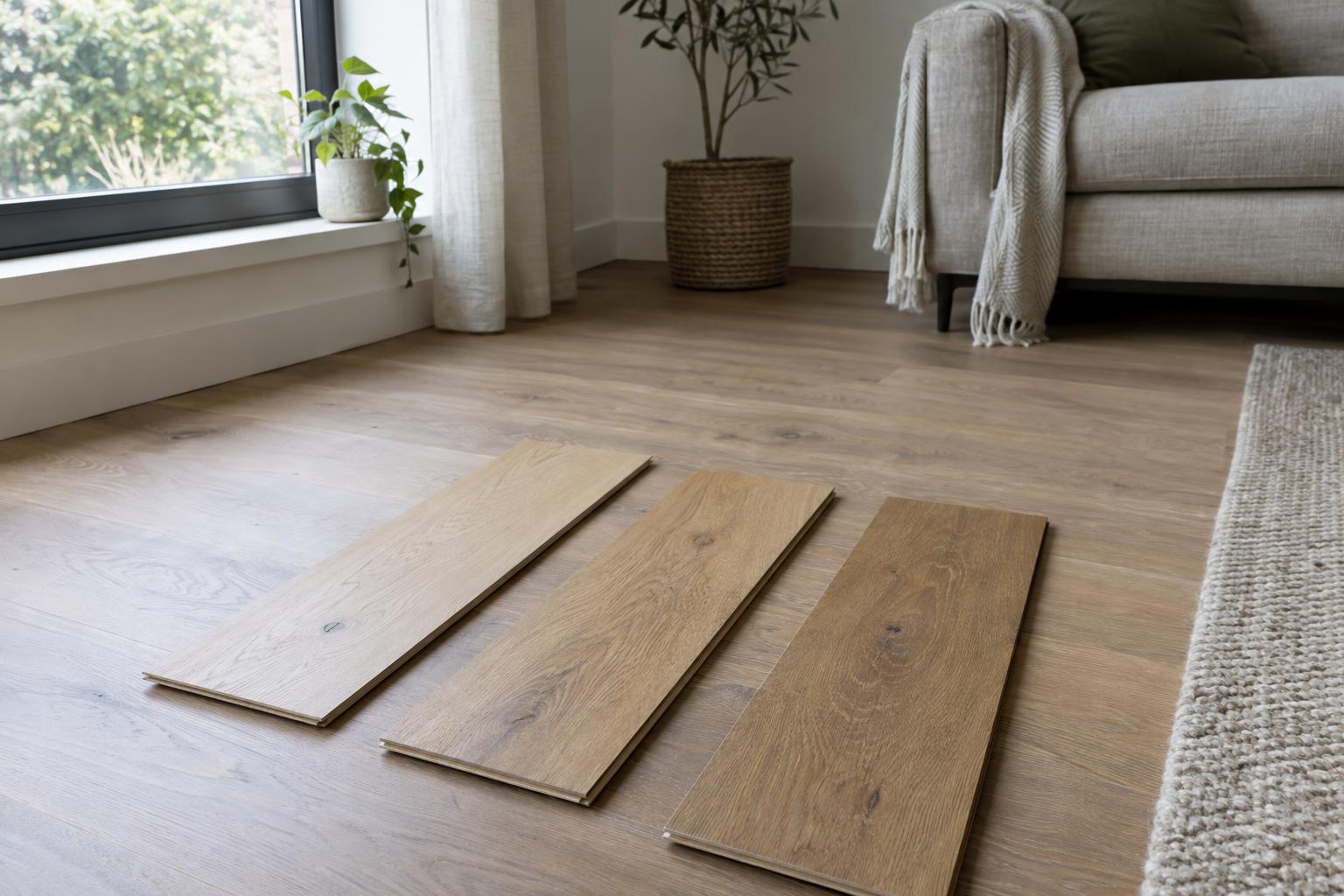
A flooring sample looks different in a showroom, beside a sunny window and under the lights you use at night. Bring samples into the room where the floor will go before deciding. A few deliberate comparisons can expose colour and finish differences that a catalogue image hides.
See each sample in the actual room
Place samples flat on the floor rather than holding them up against a wall. Look at them near the window, in a shaded corner and beside major furniture. Check them in morning light, afternoon light and your usual evening lighting. Warm bulbs can make a grey finish appear beige; strong daylight may emphasize a cooler undertone. Put a white sheet of paper beside each sample if the surrounding colours make comparisons difficult.
Use enough surface to judge pattern
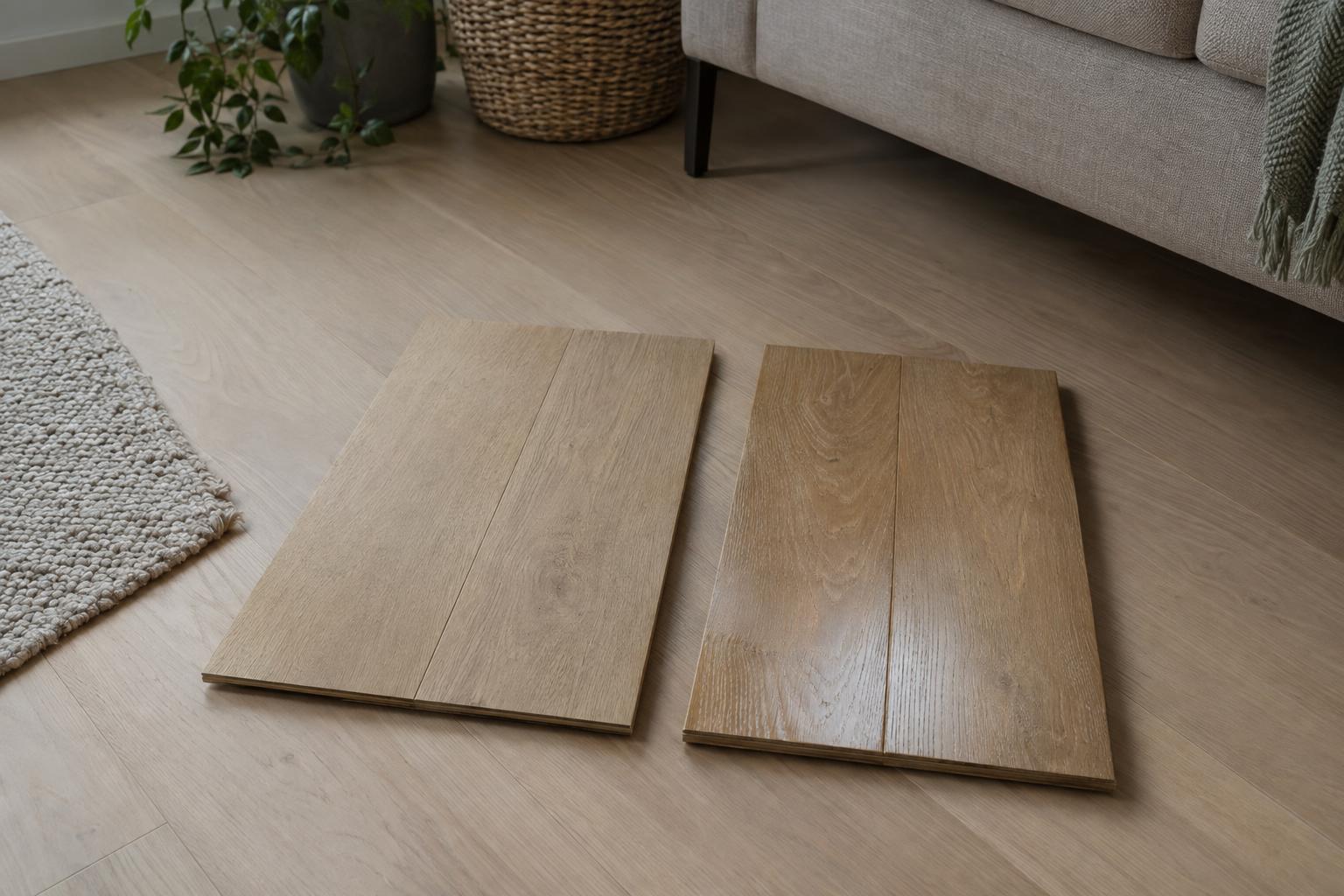
A tiny square can conceal how much variation exists between boards or carpet sections. Ask whether a larger display or multiple pieces are available. For wood and wood-look flooring, compare grain, knots and colour spread across pieces. For carpet, view the pile from more than one direction. Do not assume every installed plank or carpet section will look exactly like the sample in your hand.
Consider room size without relying on rules
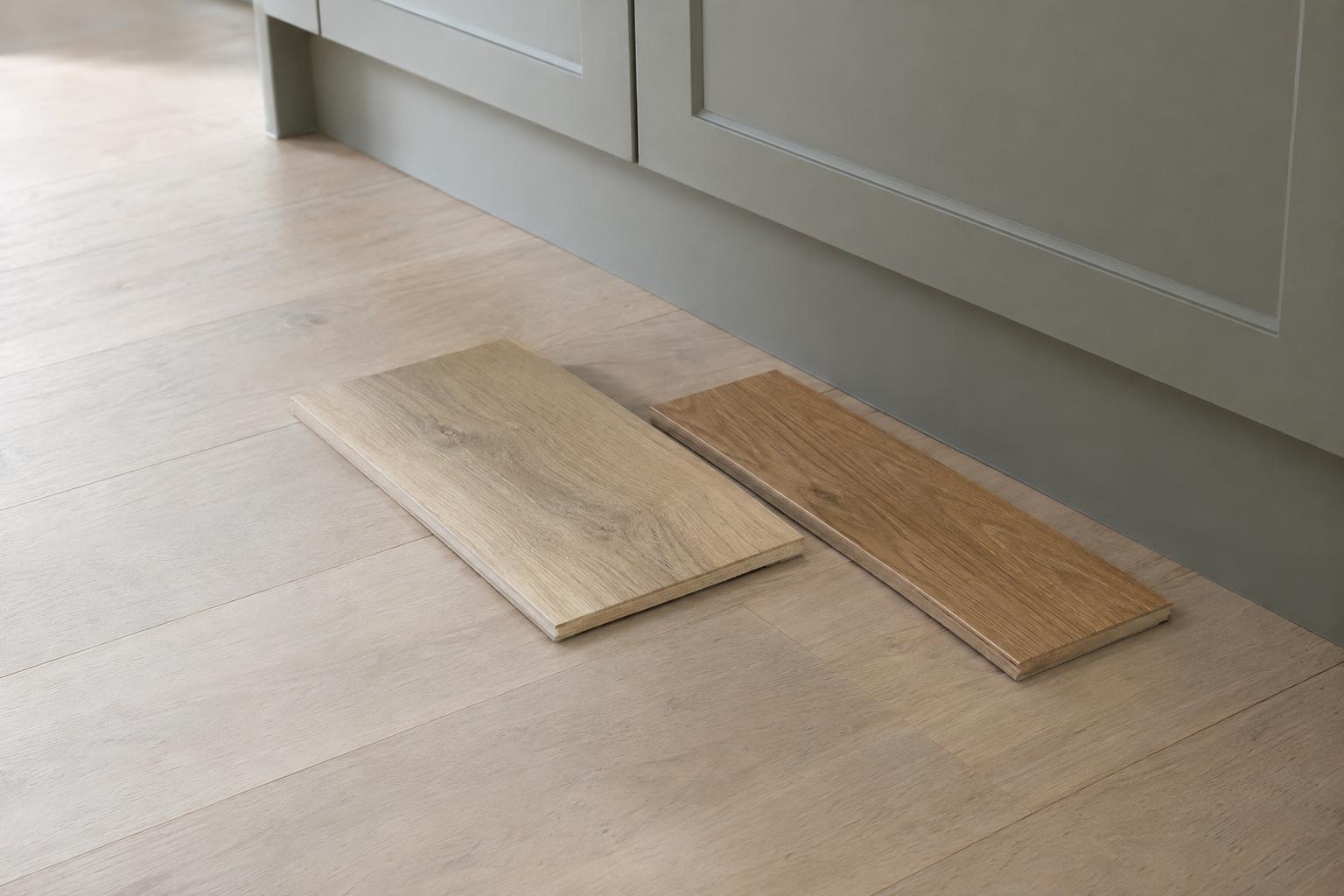
Light floors can brighten a room, while deeper tones may create contrast with pale walls. Neither choice automatically makes a room feel larger. The effect depends on wall colour, daylight, furniture and the number of visual breaks. Put the sample beside baseboards, cabinets and thresholds so you can see whether the transition feels intentional. If the new floor meets an existing one, inspect that junction closely.
Check the practical details
Ask how the finish shows dust, footprints and ordinary wear. Compare the sample’s texture underfoot and its cleaning instructions. Where moisture, pets or heavy traffic matter, discuss the product’s intended use with the retailer and read the manufacturer’s care and warranty information. A beautiful colour will disappoint if the material is unsuitable for the room.
Compare undertones beside fixed finishes
Look closely at the elements that are unlikely to change soon: a stone countertop, fireplace surround, kitchen cabinets, tile or large built-in. A floor described as neutral can still lean yellow, red, pink, blue or green. That cast may be subtle in isolation and obvious beside a fixed finish. Put each sample directly against the other material and step back several feet. Take a photo if it helps you remember, but make the final judgment in person because phone cameras adjust white balance and exposure.
Bring the comparison into adjacent rooms, too. A floor visible from a hallway does not have to match every surface, but an abrupt colour change may draw attention to a transition. Consider the direction from which you usually enter and the view from your main sitting area. Where a new surface meets an existing floor, ask how the installer would finish the edge and whether there will be a height difference.
Separate colour from finish and texture
Two samples of almost the same colour can behave differently in a room because one is glossy and the other is matte. A glossy surface can reflect windows and lamps more strongly; a textured finish may break up those reflections. Check how the sample looks from a seated position as well as while standing. If glare is a concern, look at it when the sun is lowest and again under evening lights.
Touch the surface and ask how it is meant to be cleaned. A highly textured sample may hold dirt in grooves; a very smooth surface may reveal fine dust or marks. What works best depends on the material and how your household uses the space. Ask the retailer for the actual manufacturer’s care guidance for the product you are considering. Do not rely on general advice for every floor in the category.
Test the sample against real furniture
Move a sample near the sofa, dining table and cabinets that will stay. Compare the floor with upholstery and rug colours in the same light. If you expect to replace a rug later, judge the visible floor without it as well. You may find that a finish you liked in isolation clashes with one large piece of furniture, or that a subtle grain works better than a dramatic pattern once the room is furnished.
Consider a few pieces of the proposed material together. Repeating pattern in a small sample may be less noticeable over a whole floor, while a strong grain may become the room’s dominant feature. Ask to see installed examples of the exact product line, not just a similar colour from another collection. Installation photos are useful for scale, though different lighting and camera settings can make the colour unreliable.
Take notes before the samples leave the house
Write the manufacturer, product name, colour, finish and size on a separate note or take a clear photo of the packaging label. Record where the sample looked best and any concern you noticed. After several samples, it is easy to remember the appealing colour but forget which product had the suitable wear layer or maintenance instructions. Keep practical requirements beside aesthetic notes so you can weigh them together.
If several people are choosing the floor, ask each person to view the samples at the same times of day and write down their reactions independently. A quick vote under showroom lights can hide a concern that becomes obvious at home. Narrow the choice to two or three samples before requesting a final quote. This also gives the retailer a chance to confirm current product availability and installation requirements.
Ask about the complete installed result
The sample only shows the visible surface. Underlayment, subfloor condition, transitions and installation method affect the finished project. Ask which preparation steps are included in a quote and which conditions could change the price or timeline after the existing floor is removed. For wood or wood-look products, ask about acclimation and moisture requirements specified by the manufacturer. For carpet, discuss the recommended pad and how seams will be placed.
A sample should also help you imagine maintenance over years, not just the first day. If you have pets, children, rolling furniture or frequent spills, tell the retailer. Ask which performance claims come from the manufacturer and what the warranty actually covers. A sales description cannot substitute for the written product terms. Choose the option that fits the room’s use as well as its light and colour.
The National Wood Flooring Association offers consumer information about wood floors. For any material, confirm the selected product’s specifications and instructions with its manufacturer before ordering.
Give the final choice a second day
Once you have a favourite, leave it in the room overnight and look again before ordering. The excitement of a new colour can fade when you see it beside ordinary clutter, daylight shifts and evening lamps. If the sample still works at those times, ask the retailer to confirm the exact collection and colour code. Small differences between displays, photos and production runs mean a similar name is not enough.
Keep the sample until the delivered material has been checked. Compare it with a few pieces from the actual order before installation. If the colour or texture appears substantially different, ask for an explanation before work begins. This final check connects the thoughtful selection you made at home to the material that will actually cover the room.
Frequently Asked Questions
Where should I compare flooring samples?
Place them flat in the actual room, including near a window, in a shaded area and beside furnishings or fixed finishes. Check them in the lighting you use at different times of day.
Will a light floor always make a small room look larger?
No. The effect depends on wall colour, daylight, furniture and visual breaks, so compare the sample in the room rather than relying on a rule.
What should I confirm before ordering?
Ask about the exact collection and colour code, care instructions, product suitability, subfloor preparation, transitions and which installation steps are included in the quote.
Tony’s Flooring offers a range of flooring products, including engineered hardwood. Bring photos of the room, dimensions and existing finishes to the Etobicoke store, or contact the team to discuss samples and installation.